
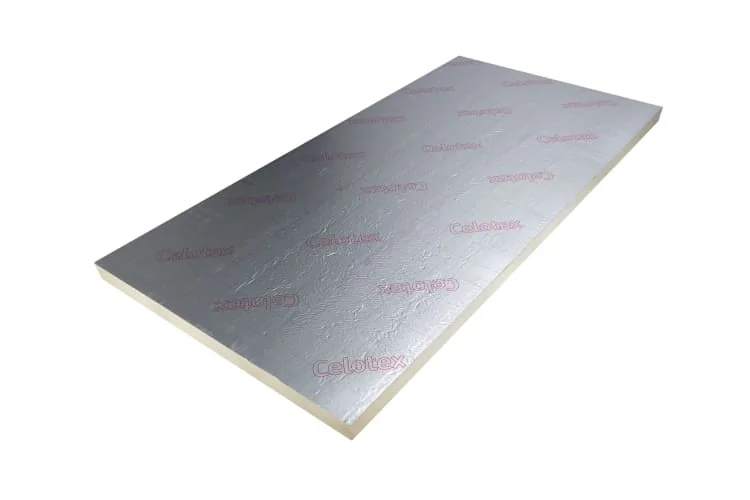
150mm PIR Insulation 2400 x 1200mm
0 suppliers compared
Prices verified daily
Product Details
Ranging from 50-150mm thickness, these rigid foam panels (brands like Celotex/Kingspan) offer superior thermal performance (0.022W/mK). The 150mm version achieves exceptional U-values in roofs, while thinner options suit wall cavities. Protective gloves are recommended during cutting to prevent skin irritation
As of October 2026, PriceNailer data confirms that the cheapest price for 150mm PIR Insulation 2400 x 1200mm is £67.50 from Insulation UK across 6 suppliers. Prices have increased by 25.3% over the last 20 months.
Price History
Frequently Asked Questions
What U-value does 150mm PIR insulation achieve in roofs?
With a thermal conductivity of 0.022W/mK, 150mm PIR insulation typically achieves U-values around 0.15 W/m²K or better in roof applications. This easily meets and exceeds current Building Regulations requirements for thermal performance.
How many sheets of 2400x1200mm PIR insulation do I need per square metre?
Each 2400x1200mm sheet covers 2.88 square metres. Therefore, you need approximately 0.35 sheets per square metre of coverage area.
Can I cut 150mm PIR insulation boards myself?
Yes, PIR boards can be cut with a sharp knife or saw, but always wear protective gloves as the foam can cause skin irritation. Score deeply and snap for clean edges, or use a fine-toothed saw for precise cuts.
Is 150mm PIR insulation suitable for wall cavities?
150mm thickness is typically too thick for standard cavity walls, which usually accommodate 50-100mm insulation. The 150mm boards are primarily designed for roof applications where maximum thermal performance is required.
What's the difference between Celotex and Kingspan PIR boards?
Both brands offer similar thermal performance (0.022W/mK) and are manufactured to comparable standards. The main differences are in facing materials, joint systems, and specific product certifications, with choice often coming down to availability and price.